Is It Okay to Get New Gutters Before a New Roof in Beech Grove?
The order you do these two projects in affects your budget, your fascia and how much cleanup you end up living with.
Is it okay to get new gutters before a new roof?
Yes, it can be okay, but in most cases it is better to replace the roof first or do both jobs together. A roof replacement means work right along the eaves, where new gutters hang, and that can damage or disturb them. If your roof has many good years left, new gutters first is perfectly reasonable.
Why roofers usually prefer the roof to come first
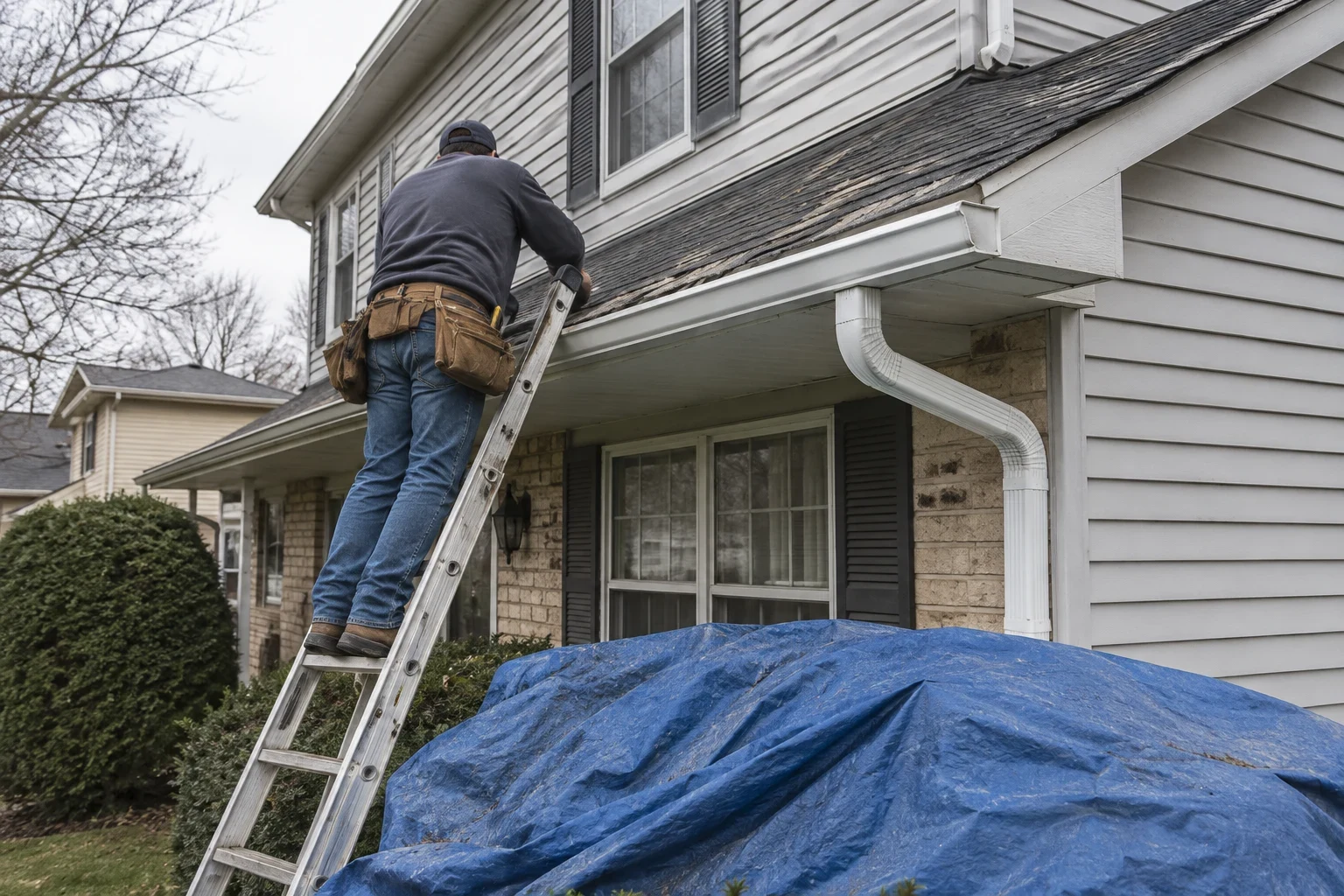
Gutters and the roof meet at the edge of your home, and that edge is where a lot of roof replacement work happens. During a tear-off we remove old shingles, underlayment and usually the drip edge, the bent metal strip that guides water off the roof and into the gutter. New drip edge has to sit correctly over the gutter's back edge, and sometimes that means loosening or pulling gutters to get it right.
Tear-off is also messy. Old shingles, nails and granules slide down the roof, and even with tarps and careful handling, a brand-new gutter can pick up a dent or a scratch. When the gutters are old anyway, a little wear during the roof job is no loss. When they were installed last month, it stings.
There is a fit question too. A new roof can change the roof edge slightly, with new drip edge, a different starter strip or replaced decking along the eaves. Gutters hung before that work may end up a little too high or too low for where water actually comes off the new roof.
- Drip edge and gutter apron need to lap over the gutter in the right order
- Gutter hangers may have to come off to replace rotted fascia or decking at the eaves
- Tear-off debris can dent, clog or scratch new gutters
- A new roof edge can shift where water lands
When getting gutters first makes sense
Plenty of homeowners have a good reason to do gutters now and the roof later. If your roof is fairly new or in solid shape, there is no reason to wait years on gutters that are failing today. Water spilling over a sagging gutter can rot fascia boards, wash out flower beds and soak the soil against your foundation, which can show up as a damp basement.
Indiana's freeze-thaw cycles make this worse. Water that sits in a pulled-away gutter freezes, expands and pries the gutter further off the house, and ice can back up along the eaves. Fixing drainage before another winter is often the smarter move when the roof itself is holding up.
The key is knowing how much life the roof really has. If it is likely to need replacing in the next couple of years, spending on gutters now may mean paying to take them down and rehang them sooner than you'd like.
- Your roof has many years of life left
- Gutters are leaking, sagging or pulling away now
- Overflow is staining siding, rotting fascia or wetting your basement
- You'd rather spread two projects out for budget reasons
The case for doing both at the same time
When the roof and gutters both need work, doing them together is usually the cleanest option for you and your home. The crew can replace drip edge, repair any soft fascia and hang the new gutters in one sequence, so every piece fits the piece next to it. You also deal with one round of ladders, trucks and noise instead of two.
Doing them together also lets us size the gutters for the new roof. A steeper pitch or a large roof plane can send more water to one corner than an older, undersized gutter was ever built to handle, and that is easier to plan for when everything is being installed at once. We offer financing, which some homeowners use to take care of both projects in one visit rather than splitting them up.
How we protect gutters and your yard during a roof job
Whichever order you choose, the eaves need care during any roof work. We set tarps and plywood along the foundation and over shrubs, and we keep debris from piling into the gutters as we go. If gutters stay on during the roof job, we lean ladders on standoffs instead of directly against the gutter so they don't get crushed.
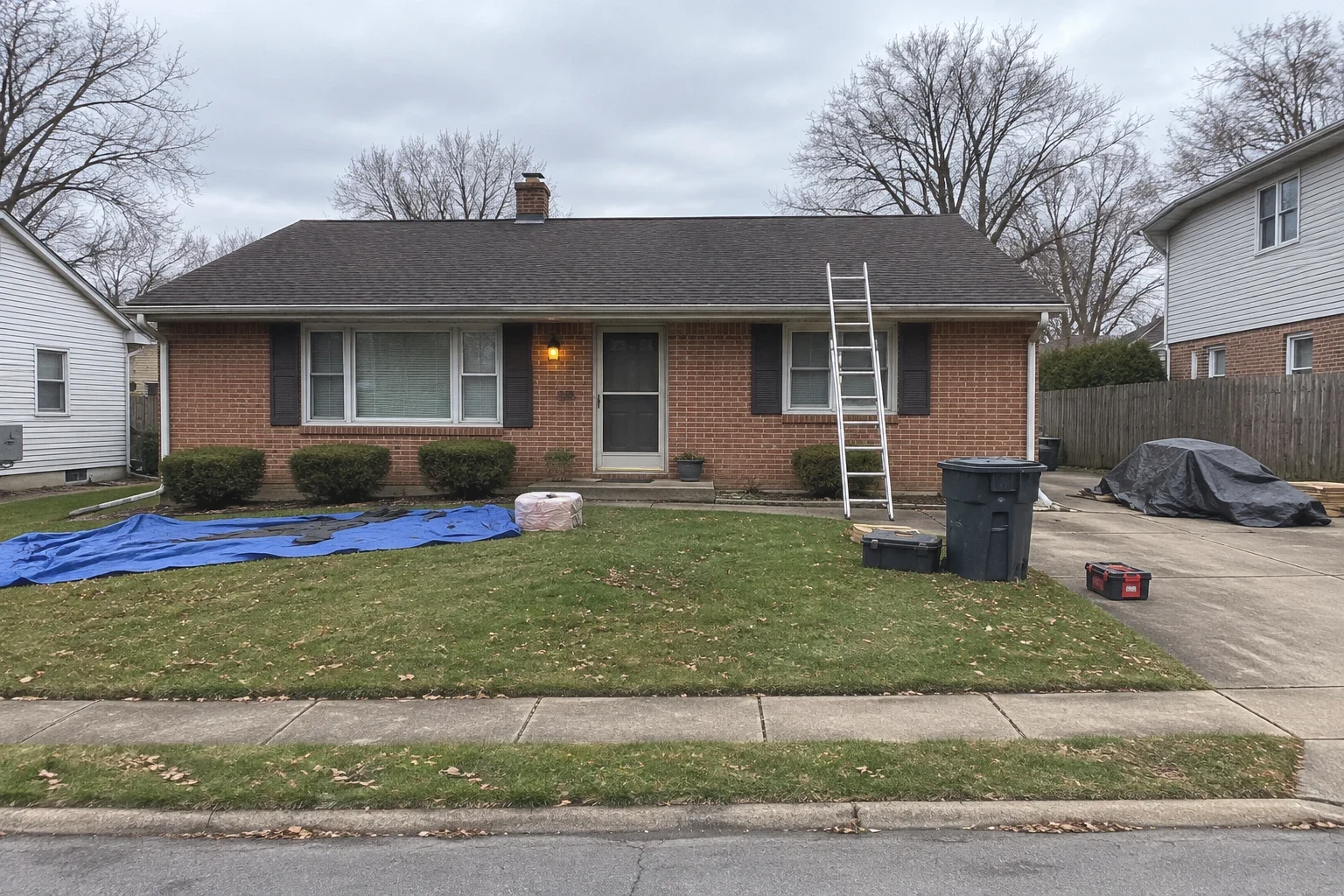
At the end of each day we pick up loose shingles and run a magnetic sweeper across the driveway, lawn and beds for stray nails. Before we leave for good we flush the gutters and downspouts so granules and bits of felt aren't left to clog them in the next rain. Our aim is to hand your yard back looking the way it did before we arrived.
How to decide for your home
The simplest way to choose is to have someone look at both the roof and the gutters on the same visit. An inspection can tell you whether the shingles have years left or are close to the end, whether the fascia behind the gutters is sound and whether the drip edge is doing its job.
With that answer in hand, the order usually becomes obvious. A healthy roof means gutters can go first. A tired roof means waiting, or doing both together, will save you rework and a second round of cleanup.
More questions about gutters and roof timing
Can my existing gutters stay on during a roof replacement?
Often they can, as long as they are in decent shape and the drip edge can be replaced without removing them. If the fascia behind them is rotted, they will need to come down so the wood can be repaired first.
Will a new roof work with gutters I just installed?
Usually, yes. The roofer should check that the new drip edge laps into the gutter correctly and that the gutter's slope still carries water to the downspouts, then adjust hangers if needed.
What if storm damage hit both my roof and gutters?
Hail and wind can damage both, and they are often looked at together on a claim. We work with homeowners and insurance companies on storm damage claims, and we can document what we find on the roof and gutters so you have a clear picture.
Is fall or spring better for gutter work?
Either works well. Many homeowners like having gutters done before fall leaves drop and before winter freezes, so water drains properly through the cold months.
Not sure which project should come first?
We'll inspect your roof and gutters together, tell you honestly how much life your roof has left and explain the order that saves you rework. The inspection is free, and we leave your yard as tidy as we found it.